CHANGES IN THE MOODS OF UKRAINIAN SOCIETY (2022–2025)
Sat, 27 Sep, 2025

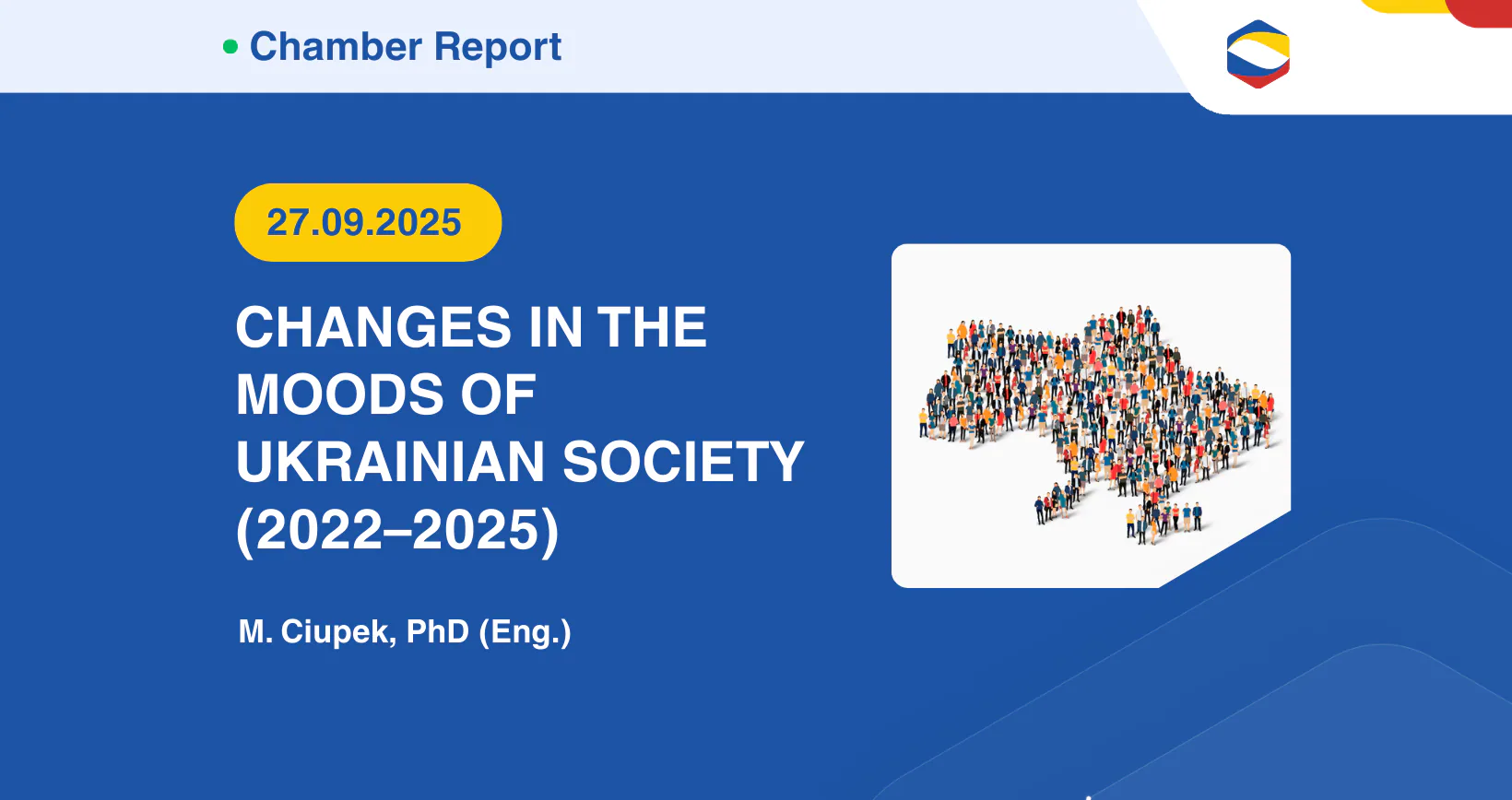
CHANGES IN THE MOODS OF UKRAINIAN SOCIETY (2022–2025)
Since russia’s full-scale invasion, Ukrainians have shown remarkable resilience, solidarity, and an ability to adapt. Between 2022 and 2025, public attitudes shifted in clear phases. Drawing on the Institute of Sociology’s GSR-5 approach (a five-question barometer of the “background tone” of opinion) and complementary public data, this article explains how and why those shifts occurred linking frontline events with energy shocks, economic dynamics, and classic “rally-round-the-flag” effects.
1) 2022: Shock → Unity → Confidence
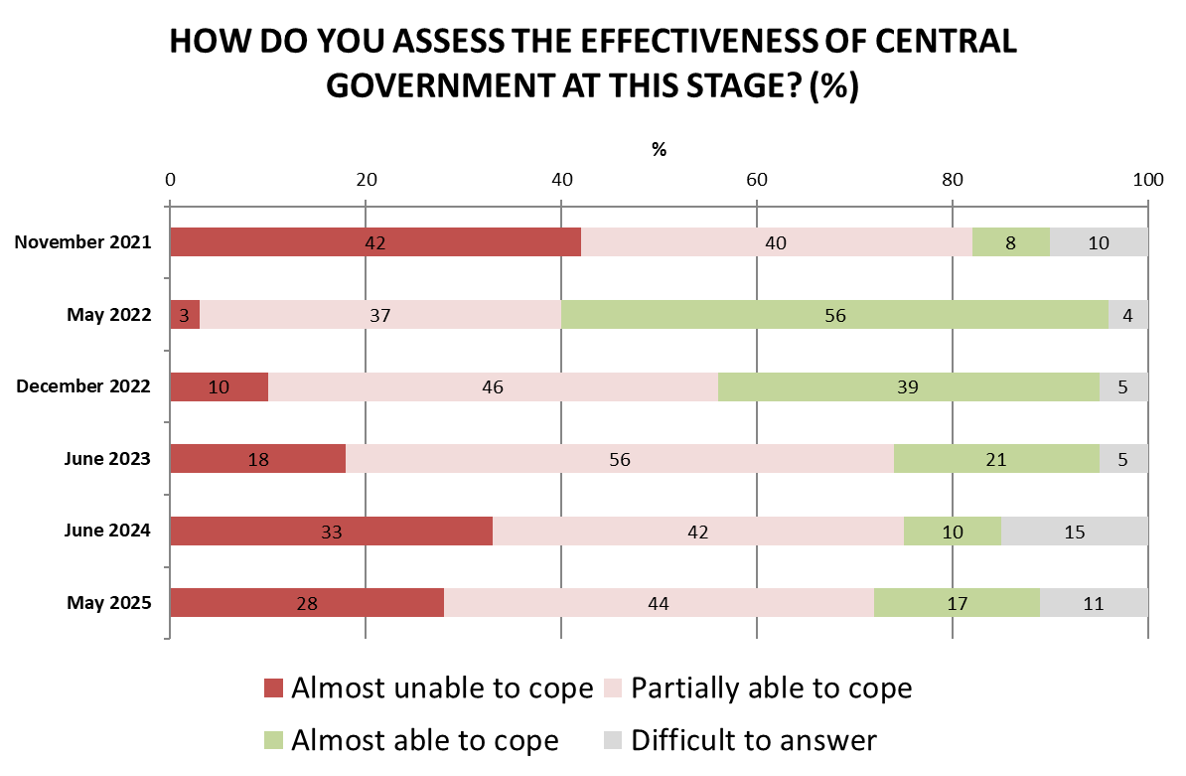
At the outset of the invasion, the country witnessed queues at enlistment offices, a surge of volunteering, and a broad readiness to support the army. This was a textbook rally-round-the-flag moment an acute external threat temporarily lifted support for leaders and institutions. In the first half of 2022, evaluations of central authorities improved sharply from late-2021 baselines, and trust clustered around the Armed Forces, state institutions, and volunteers.
Why the jump felt “paradoxical.” The first months were the war’s hardest; yet many ratings improved. When survival is at stake, the public consolidates and suspends some criticisms especially when government action looks competent and society self-organizes effectively.
2) 2023–2024: Resilience Meets Fatigue
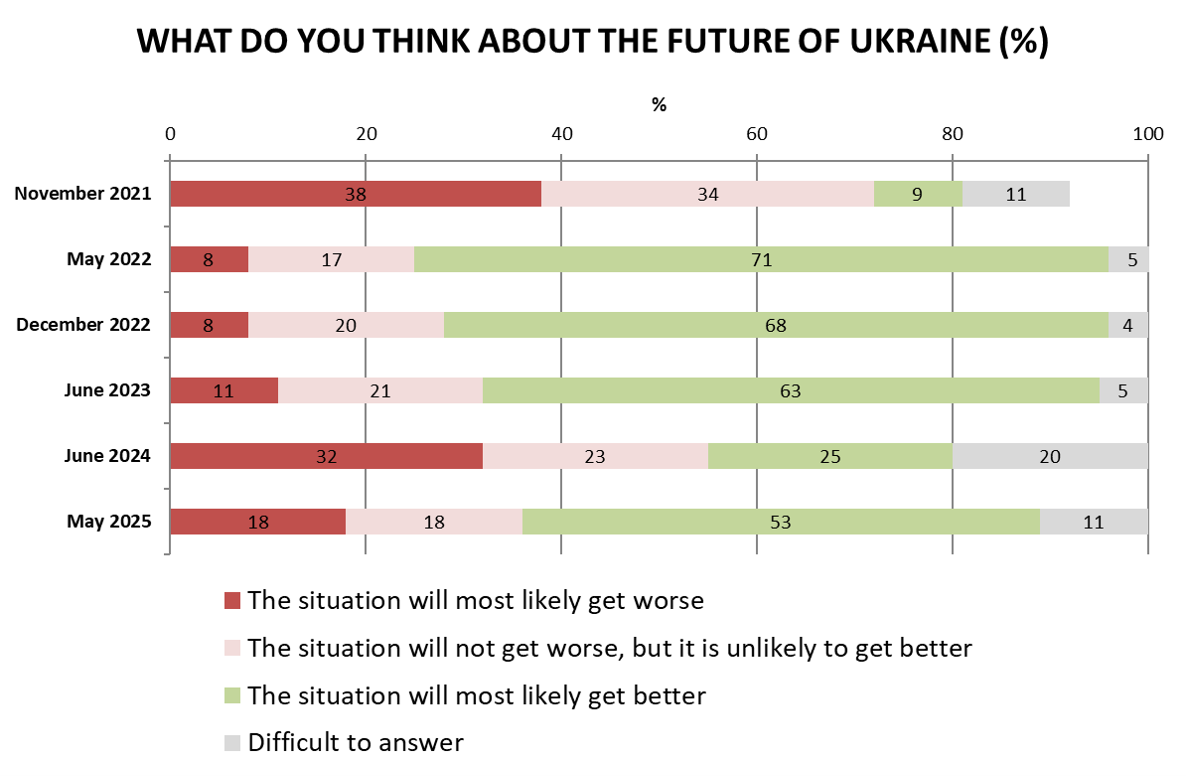
As the war lengthened, the initial euphoria cooled. The GSR-5’s government-effectiveness line eased from its 2022 highs through 2023–2024, while the “future outlook” indicator softened but remained far above 2021 levels. Several real-world pressures explain this moderation:
What people reported. In 2022–2023, many respondents described living conditions as “generally satisfactory” compared with 2021’s “mostly bad,” reflecting the system’s surprising ability to function despite bombardments. From 2024, negative answers crept back consistent with blackouts, inflation, mobilization pressure, and intensified Shahed raids—yet still not as bleak as pre-war.
3) Early–Mid 2025: Tempered Optimism, Conditional Trust
By spring 2025, the overall mood was more positive than in late-2021, but less elevated than in 2022. Optimism about the future recovered toward roughly half of respondents, while satisfaction with “events in the country” remained the weakest line of the index. Economic projections for 2025 pointed to modest growth amid ongoing constraints reinforcing pragmatic expectations rather than exuberance.
A smaller second rally in early 2025 after a high-profile international confrontation briefly lifted several socio-political assessments, echoing the 2022 mechanism that crowds out criticism in moments of intense focus. Yet frequent Shahed attacks and missile barrages continued to fuel frustration. Citizens could believe in eventual victory while still resenting the exhausting rhythm of air raids, blackouts, and mobilization rules. This did not reset daily-life frustrations.
4) What the GSR-5 Teaches
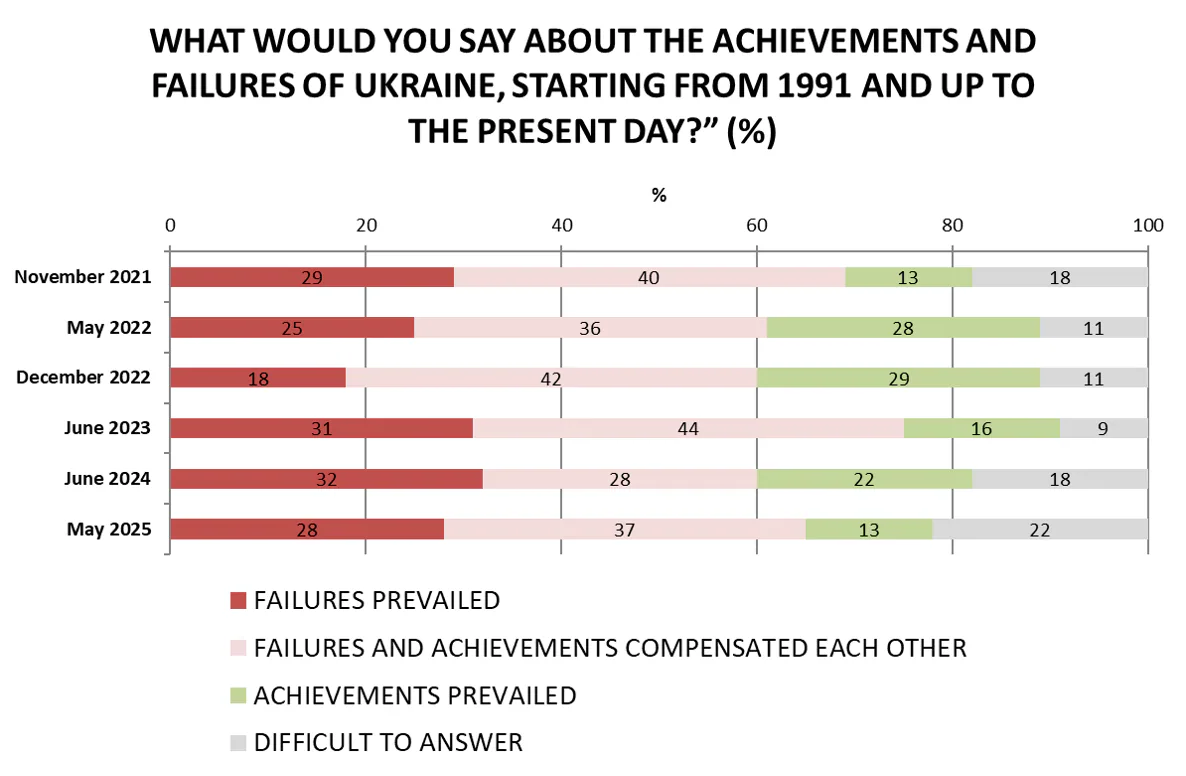
The Institute of Sociology’s GSR-5 is designed to capture the general background of public opinion how positive or negative the climate is by blending five questions: assessments of central authorities, expectations for Ukraine’s future, living conditions for the majority, achievements vs. failures since 1991, and satisfaction with current events. This background tone helps explain why specific items move together (or don’t) across a war year. In Ukraine:
5) Why These Trends Make Sense
6) Implications
What leaders and policymakers should do in response to the mood changes in Ukrainian society?
Strengthen defense and protect daily life. Frequent Shahed and missile attacks make air defense and shelters not only military priorities but psychological lifelines. Every intercepted drone is also a morale boost.
Show tangible delivery. Communicate concrete outputs – defense coverage, infrastructure repairs, reconstruction milestones, veteran and family support. With fatigue, specifics matter for credibility.
Harden the grid and advertise readiness. Every avoided blackout is a morale win; transparent winter plans and rapid repairs after strikes translate directly into public confidence.
Back the job machine. Employment and income remain a backbone of optimism. Industrial projects and new jobs help keep people rooted in their communities despite war pressures.
Communicate with numbers and clarity. Optimism is durable but conditional; clear, measurable progress whether in drones intercepted, power restored, or jobs created sustains trust.
In one line
From 2022 to 2025, Ukraine’s public mood moved from extraordinary unity to steady, clear-eyed resilience less euphoric than the first war months, far stronger than pre-war 2021 shaped not only by energy and economic stabilization but also by the relentless test of missile and drone attacks, and by the visible ability of institutions to defend, repair, and deliver.
"CHANGES IN THE MOODS OF UKRAINIAN SOCIETY (2022–2025)"